
Home Exercise Library
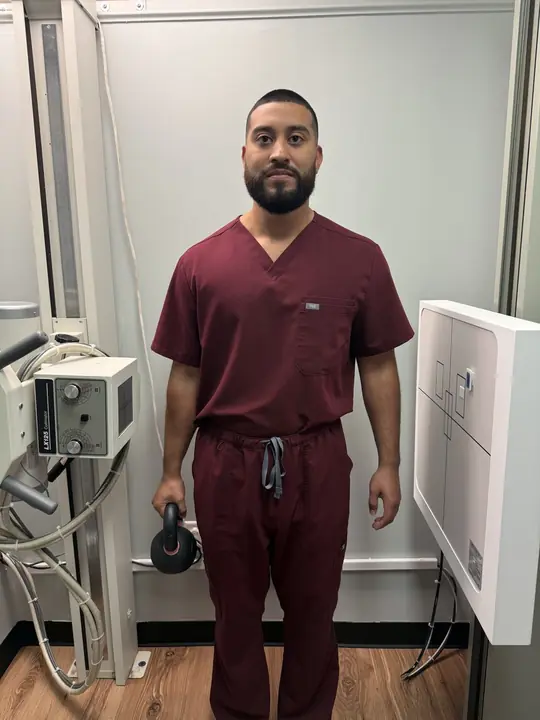
Suitcase Carry (one hand)
Demonstration video: Kettlebell Suitcase Carry & Variations (Elite Performance Institute). Follow the steps on this page if the video differs.
In our programs
- Low Back and SI Joint, Phase 4 LB-4 #3
- Shoulder, Phase 4 SH-4 #2
- Wrist and Hand, Phase 4 WH-4 #4
The dose and steps can differ by program.
Low Back and SI Joint, Phase 4: Loaded Carries LB-4 #3
Whole-body spine stability under load
Photos
Why it helps
Real life involves carrying things. Groceries, kids, work bags. This move trains your spine to stay stable under real-world load.
How to do it
- Hold a light weight in one hand at your side. Start light: 5 to 10 pounds.
- Stand tall. Shoulder blades down and back. Belly button gently pulled in. Spine stacked. Resist leaning toward the loaded side.
- Walk forward slowly for 30 seconds. Then switch hands and walk 30 seconds with the weight on the other side. That is 1 round.
- Rest 1 minute. Do 3 rounds in all, so both sides get the same work.
- If your posture breaks down, stop and rest. Form first, time second.
Too hard? Try this
Use a lighter weight (3 to 5 pounds). Or shorten to 15 seconds per round.
Too easy? Try this
Use a heavier weight (10 to 20 pounds). Or increase to 45 seconds per round.
Common mistakes
- Your posture collapses partway through.
- You hold the weight too far from your body.
- You lean or side-bend toward the loaded side.
- You hold your breath.
You should feel
- Strong, stacked posture.
- Work in your grip, shoulders, and the side of your core resisting the lean.
You should not feel
- Sharp low back pain.
- Shoulder shrug.
- Sharp pain anywhere.
Stop right away if
- Sharp low back pain.
- Pain shooting down a leg.
- Numb or tingly hands.
If you are one of our current patients, call the clinic and inform your provider right away, or seek emergency care right away. For a life-threatening emergency, call 911.
Shoulder, Phase 4: Suitcase Carries SH-4 #2
Shoulder under real-world load
Photos
Why it helps
Real life involves carrying things in ONE hand: a grocery bag, a laptop, a child. This one-sided load challenges the shoulder. Suitcase carries train your shoulder and core to handle it without dropping.
How to do it
- Stand tall holding a weight in ONE hand at your side. Start light (5 to 10 pounds).
- Set your shoulder blade DOWN and BACK. Do NOT let the loaded shoulder shrug up toward your ear.
- Walk forward slowly for 30 seconds. Stay tall. Keep both shoulders level.
- Rest 30 seconds. Switch hands and repeat for 30 seconds on the other side.
- Rest 1 minute. Do 3 total rounds (each side, 3 times). If your posture breaks down, stop and rest.
Too hard? Try this
Use a lighter weight (3 to 5 pounds). Or shorten to 15 seconds per round.
Too easy? Try this
Use a heavier weight (10 to 20 pounds). Or increase to 45 seconds per round.
Common mistakes
- The loaded shoulder shrugs up.
- You lean away from the load.
- You let your trunk twist.
You should feel
- Strong, stacked posture.
- Work in the loaded shoulder, the grip, and the core.
You should not feel
- Sharp shoulder pain.
- Numbness or tingling in the loaded hand.
- Sharp neck pain.
Stop right away if
- Sharp shoulder pain.
- Numbness or tingling down the arm.
- Sharp neck pain that does not stop.
If you are one of our current patients, call the clinic and inform your provider right away, or seek emergency care right away. For a life-threatening emergency, call 911.
Wrist and Hand, Phase 4: Carrying Drill WH-4 #4
Sustained grip under load
Photos
Why it helps
Real life involves carrying things in one hand: a grocery bag, a briefcase, a child. After a wrist injury, sustained grip under load is often slow to come back. This drill works on it gradually.
How to do it
- Hold a moderate-weight object (5 to 10 pounds to start) in the INJURED hand at your side.
- Stand tall. Shoulders down and back. Do NOT let the loaded shoulder shrug up toward your ear.
- Walk forward slowly for 30 seconds. Keep your grip steady. Do NOT drop the object.
- Set it down and rest 30 seconds. Switch hands and walk for 30 seconds with the other hand.
- Do 3 total rounds per side. If grip starts to fail, stop and rest. Form first, time second.
Too hard? Try this
Use a lighter weight (3 to 5 pounds). Or shorten to 15 seconds per round.
Too easy? Try this
Use a heavier weight (10 to 15 pounds). Or increase to 45 seconds per round. Or carry two objects, one in each hand.
Common mistakes
- Your grip fails partway through.
- The loaded shoulder shrugs up.
- You lean away from the load.
You should feel
- Strong, sustained grip.
- Stable shoulder and trunk.
- Wrist holding up under the load.
You should not feel
- Sharp wrist pain.
- Numbness or tingling in the loaded hand.
- Cramping that does not let up.
Stop right away if
- Sudden grip failure with dropping the load.
- Sharp wrist pain.
- Numbness or tingling getting worse during the carry.
If you are one of our current patients, call the clinic and inform your provider right away, or seek emergency care right away. For a life-threatening emergency, call 911.
Research behind this program
- McGill SM, McDermott A, Fenwick CM. J Strength Cond Res, 2009. PMID 19528856
Auto Injury Chiropractic
Same-day visits at three clinics
Oregon City
1404 Molalla Ave
Oregon City, OR 97045
Mon to Thu 9:00am to 6:00pm
Fri 9:00am to 1:00pm
Milwaukie
13152 SE Rusk Rd
Milwaukie, OR 97222
Mon to Thu 9:00am to 6:00pm
Fri 9:00am to 1:00pm
Troutdale
233 E Columbia River Hwy
Troutdale, OR 97060
Mon to Thu 9:00am to 6:00pm
Fri 9:00am to 1:00pm