
Home Exercise Library
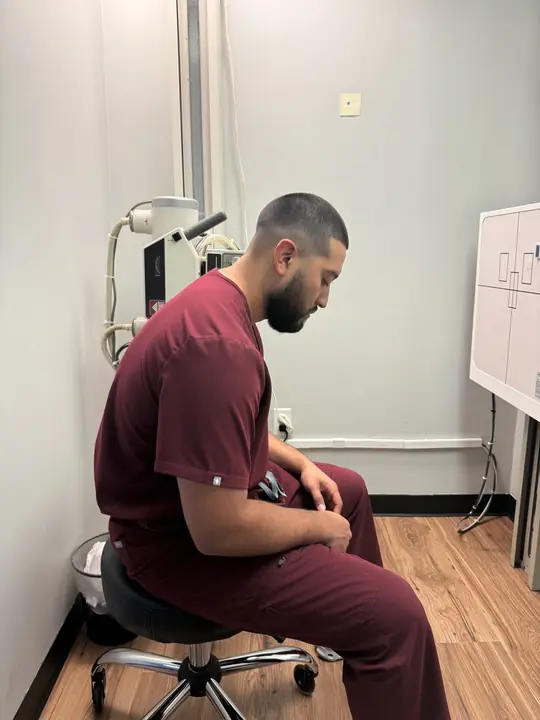
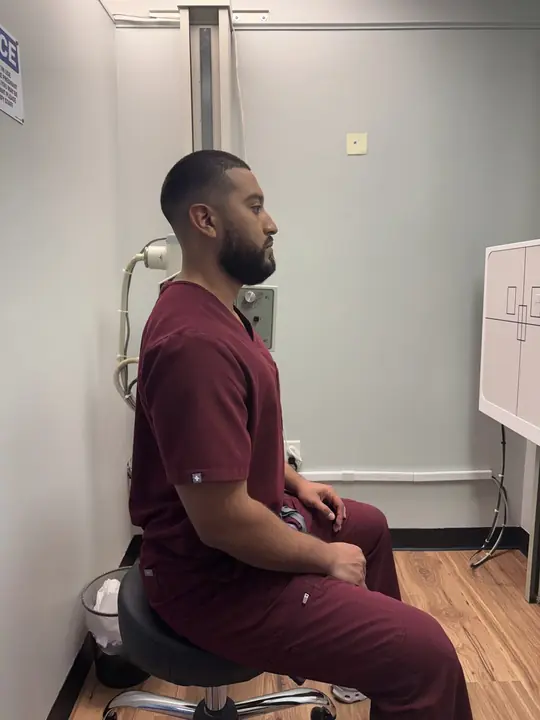
Functional Posture Drill
Demonstration video: Posture correction exercise - MAIC whiplash injury recovery (Motor Accident Insurance Commission (Queensland Government)). Follow the steps on this page if the video differs.
In our programs
- Neck and Whiplash, Stage 4 NK-4 #4
- Upper and Mid Back, Stage 4 MB-4 #4
The dose and steps can differ by program.
Printing shows the open program only. Open another program to print it.
Neck and Whiplash, Stage 4: Functional Posture Drill NK-4 #4
Build real-life endurance
Photos
Why it helps
Real life is the test. This drill practices holding your head and neck in good posture during things you do every day, like sitting at a desk, driving, or watching a show. Short two-minute sessions build the habit, and your provider adds it once your exam shows you're ready for this stage.
How to do it
- Sit at your desk, computer, or in your car (parked) as you normally would.
- Set your shoulder blades down and back (Stage 1 cue).
- Add a small chin tuck. Keep it gentle.
- Hold this stacked posture for 2 minutes while you do a normal task: type, read, or scroll on your phone.
- Notice when you start to slump. That is your reminder.
Too hard? Try this
Start with 30 seconds and build up to 2 minutes over the stage.
Too easy? Try this
Do it for 5 minutes. Or set a timer every hour to do a 30-second reset.
Common mistakes
- You force the posture and get tense.
- You hold your breath.
- You quit at the first sign of fatigue.
You should feel
- Stacked, tall posture.
- A reset feeling each time you check in.
You should not feel
- Burning or strain.
- Sharp neck pain.
Stop right away if
- Numb or tingly arms or hands.
- Headache that gets much worse.
- Vision changes.
If you are one of our current patients, call the clinic and inform your provider right away, or seek emergency care right away. For a life-threatening emergency, call 911.
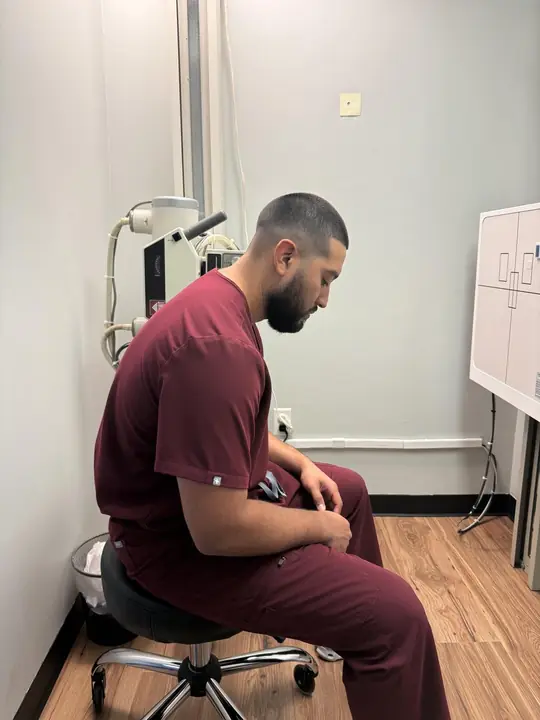
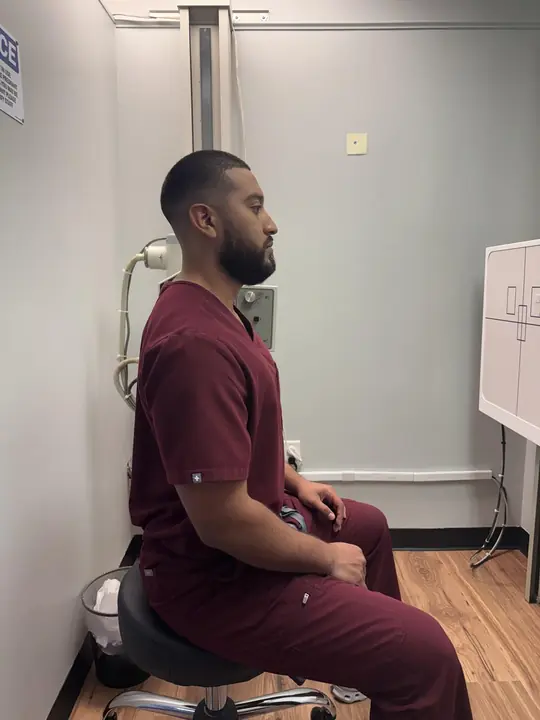
Upper and Mid Back, Stage 4: Functional Posture Drill MB-4 #4
Real-life endurance
Photos
Why it helps
Real life is the test. This drill practices holding your upper back and shoulders in good posture during things you do every day, like sitting at a desk, driving, or watching a show. Short two-minute sessions build the habit, and your provider adds it once your exam shows you're ready for this stage.
How to do it
- Sit at your desk, computer, or in your car (parked) as you normally would.
- Set your shoulder blades down and back.
- Add a small chin tuck. Keep it gentle.
- Hold this stacked posture for 2 minutes while you do a normal task: type, read, or scroll on your phone.
- Notice when you start to slump. That is your reminder.
Too hard? Try this
Start with 30 seconds and build up to 2 minutes over the stage.
Too easy? Try this
Do it for 5 minutes. Or set a timer every hour to do a 30-second reset.
Common mistakes
- You force the posture and get tense.
- You hold your breath.
- You quit at the first sign of fatigue.
You should feel
- Stacked, tall posture.
- A reset feeling each time you check in.
You should not feel
- Burning or strain.
- Sharp pain.
Stop right away if
- Numb or tingly arms or hands.
- Sharp back pain that gets much worse.
- Sudden trouble breathing.
If you are one of our current patients, call the clinic and inform your provider right away, or seek emergency care right away. For a life-threatening emergency, call 911.
Research behind this program
- Jang HJ, et al. 2019 (women 65 and older with a rounded upper back; not a car-crash study). PMID 28914720
Auto Injury Chiropractic
Same-day visits at three clinics
Oregon City
1404 Molalla Ave
Oregon City, OR 97045
Mon to Thu 9:00 AM to 6:00 PM,
Fri 9:00 AM to 1:00 PM,
closed Sat and Sun
Milwaukie
13152 SE Rusk Rd
Milwaukie, OR 97222
Mon to Thu 9:00 AM to 6:00 PM,
Fri 9:00 AM to 1:00 PM,
closed Sat and Sun
Troutdale
233 E Columbia River Hwy
Troutdale, OR 97060
Mon to Thu 9:00 AM to 6:00 PM,
Fri 9:00 AM to 1:00 PM,
closed Sat and Sun