
Home Exercise Library
Gentle Neck Range of Motion
Demonstration video: ROM: Rotation and side bending exercises - MAIC whiplash injury recovery (Motor Accident Insurance Commission (Queensland Government)). Follow the steps on this page if the video differs.
In our programs
- Neck and Whiplash, Phase 1 NK-1 #3
- Neck and Whiplash, Phase 2 NK-2 #2
The dose and steps can differ by program.
Neck and Whiplash, Phase 1: Gentle Neck Moves NK-1 #3
Teaches your neck it is safe to move
Photos
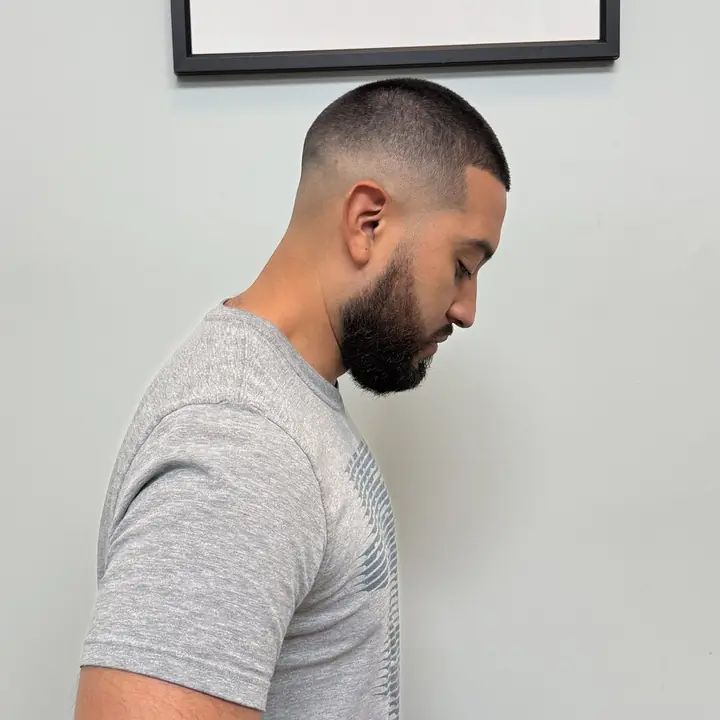
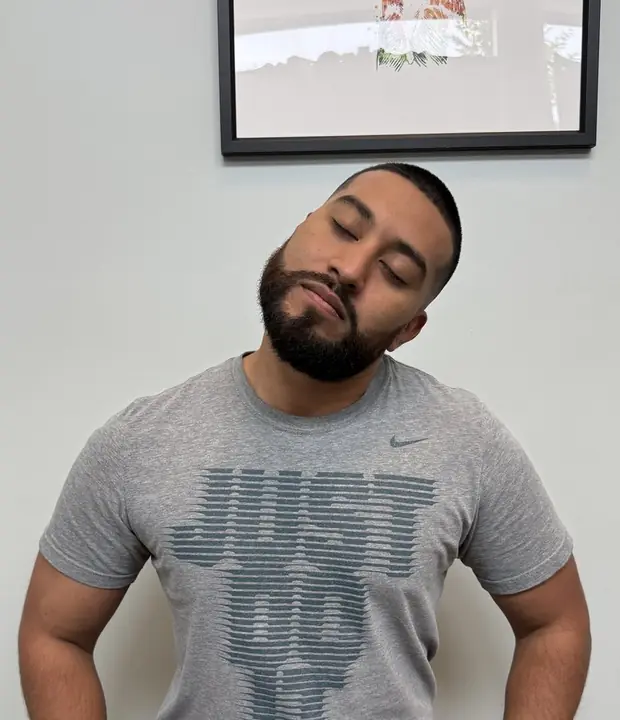
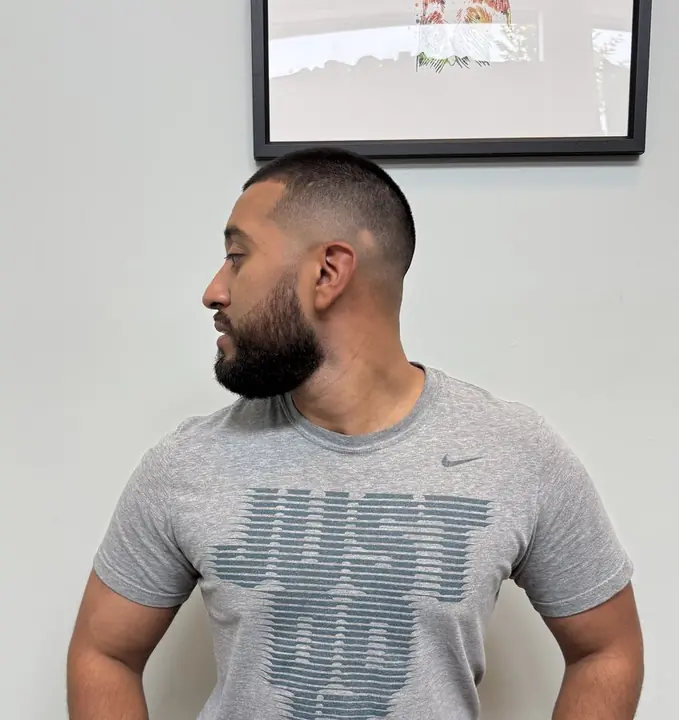
Why it helps
After a crash, your brain limits how much your neck moves to protect you. Slow, gentle moves teach your brain that moving is safe.
How to do it
- Sit up tall in a chair. Feet flat. Shoulders relaxed.
- Look DOWN: lower your chin to your chest. Then look back up. Do 5 times.
- Look SIDE TO SIDE: look over your right shoulder, then left. Do 5 each side.
- TILT: bring your right ear toward your right shoulder, then left. Do 5 each side.
- Go only as far as feels okay. Move slowly. Do not bounce.
Too hard? Try this
If one direction hurts, go only halfway. Still hurts? Skip it this phase and tell your provider.
Too easy? Try this
Hold 3 seconds at the end of each move. Or try it standing up.
Common mistakes
- You move fast or bounce.
- Shoulders go up as your head moves.
- You push through pain.
You should feel
- Smooth, easy motion.
- Both sides feel about the same by end of phase.
You should not feel
- Sharp pain at any point.
- Dizzy when you turn your head.
Stop right away if
- Dizzy, sick to your stomach, or your vision changes when you move your head.
- Numb or tingly arms or hands.
- Sharp pain that does not ease when you stop.
If you are one of our current patients, call the clinic and inform your provider right away, or seek emergency care right away. For a life-threatening emergency, call 911.
Neck and Whiplash, Phase 2: Neck Moves with Holds NK-2 #2
Build confidence through full motion
Photos
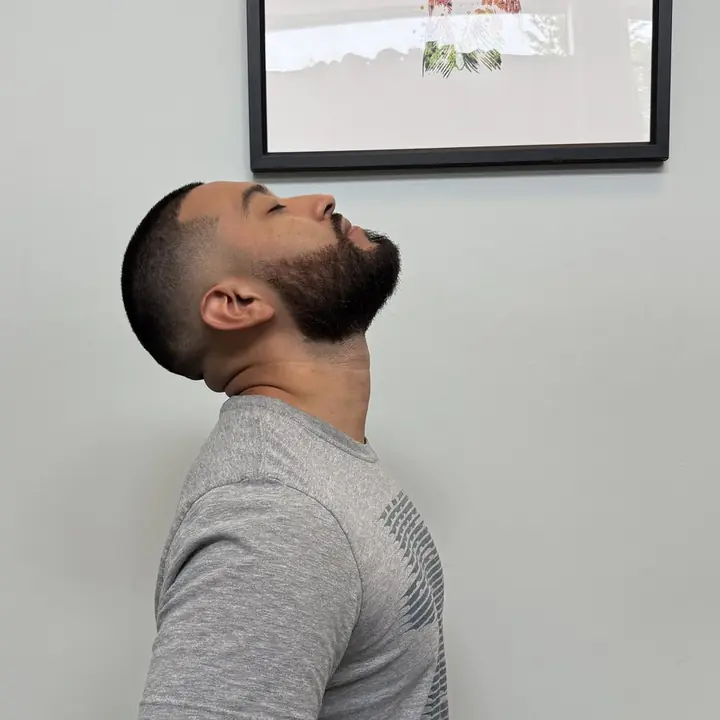
Why it helps
Last phase you moved your neck gently in each direction. This phase you hold at the end for 3 seconds. This builds trust and control all the way through each move.
How to do it
- Sit up tall in a chair. Feet flat. Shoulders relaxed.
- Look DOWN: lower your chin to your chest, hold 3 seconds, then look back up, hold 3 seconds. Do 5 times.
- Turn SIDE TO SIDE: look over your right shoulder, hold 3 seconds, then your left, hold 3 seconds. Do 5 each side.
- TILT: right ear toward right shoulder, hold 3 seconds, then left. Do 5 each side.
- Move slowly. Hold at the end without pushing hard.
Too hard? Try this
Hold for 1 second instead of 3. Or skip the hold and do the Phase 1 version for one more phase.
Too easy? Try this
Hold each end position for 5 seconds. Or do all moves standing up.
Common mistakes
- You push past what feels comfortable to make the hold longer.
- You bounce into the hold.
- You hold your breath during the hold.
You should feel
- Smooth motion to the end and a steady hold.
- Both sides look about the same.
You should not feel
- Sharp pain at the end of the move.
- Dizzy when you turn your head.
Stop right away if
- Dizzy, sick to your stomach, or your vision changes when you move your head.
- Numb or tingly arms or hands.
- Sharp pain that does not ease when you stop.
If you are one of our current patients, call the clinic and inform your provider right away, or seek emergency care right away. For a life-threatening emergency, call 911.
Research behind this program
- Soderlund A, Olerud C, Lindberg P. Clin Rehabil, 2000. PMID 11043871
Auto Injury Chiropractic
Same-day visits at three clinics
Oregon City
1404 Molalla Ave
Oregon City, OR 97045
Mon to Thu 9:00am to 6:00pm
Fri 9:00am to 1:00pm
Milwaukie
13152 SE Rusk Rd
Milwaukie, OR 97222
Mon to Thu 9:00am to 6:00pm
Fri 9:00am to 1:00pm
Troutdale
233 E Columbia River Hwy
Troutdale, OR 97060
Mon to Thu 9:00am to 6:00pm
Fri 9:00am to 1:00pm